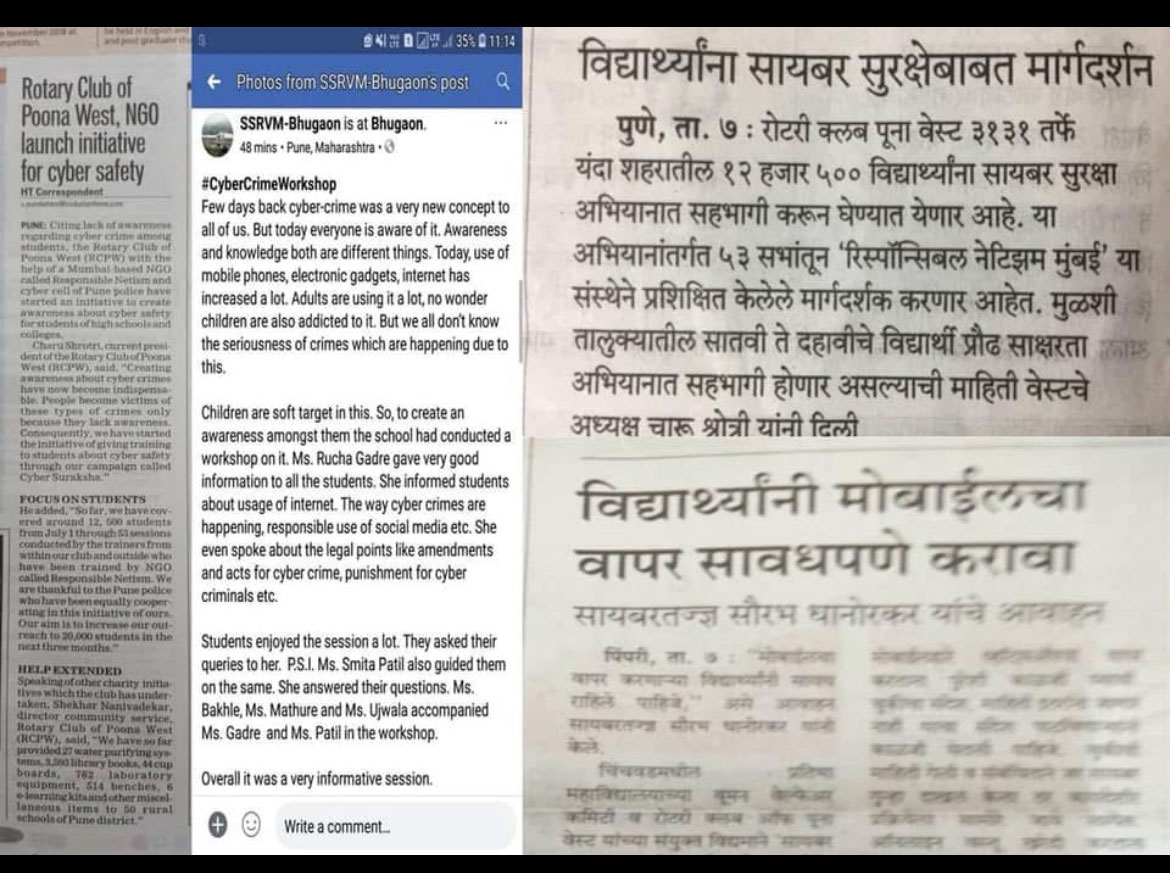
Rotary Club of Poona West
A 73-year-old Pune-based entrepreneur, who runs a pharma consultancy and a real estate business, has fallen victim to a sophisticated online share trading fraud, losing a staggering ₹2.32 crore between May and July this year.
The scam began innocuously in May when the victim spotted a social media advertisement promoting a stock trading firm, deceptively featuring a photograph of Union Finance Minister Nirmala Sitharaman to lend it credibility. Clicking on the ad triggered a call from an unidentified number, with the caller posing as a representative who promised attractive investment returns and encouraged him to download a trading app via a shared link.
To build trust, the fraudsters used a classic "seeding" tactic: after the victim transferred an initial ₹11 lakh, they returned ₹74,000 to his account, creating a false sense of legitimacy and security. Convinced by the app's dashboard, which falsely showed his investments ballooning into a ₹6 crore profit, the victim continued transferring funds to multiple accounts over the following weeks, eventually parting with ₹2.32 crore by July 30.
The illusion shattered when he attempted to withdraw his supposed earnings and found himself unable to access any funds. Realising he had been scammed, he approached the Pune cyber police, who have registered a case and traced the siphoned money to bank accounts in Vadodara, Hyderabad, and Pune. Investigators have sought detailed banking records to track down the perpetrators.
Cyber police continue to urge citizens to verify trading platforms independently and remain wary of investment offers linked through unsolicited social media ads, regardless of how authentic they appear.
Pune: An 82-year-old retired Indian Air Force officer from Wanowrie lost ₹10 lakh after cybercriminals impersonated officials and targeted him over an alleged mistake in his SIR form.
The fraudsters claimed that his father’s name had been wrongly mentioned and sent him an online correction form. After filling it, he called the number provided in the message.
The fraudsters obtained his Aadhaar, PAN, debit-card and banking details and gained remote access to his bank account. Soon, ₹7 lakh and ₹3 lakh were siphoned off through two transactions. Pune police registered an FIR and began investigating the case.
1. Never click unknown links or fill forms received through suspicious messages.
2. Government officials will not ask for your banking passwords, PINs or OTPs.
3. Never give anyone remote access to your phone or computer.
4. Verify the message through the official government website/office before acting.
5. If you suspect fraud, immediately inform your bank and cybercrime authorities.
A Bavdhan-based automobile dealer lost ₹2.2 crore in a cybercrime involving the impersonation of company directors. The fraud occurred between August 13 and 14 and targeted the firm’s account executive.
According to police, the criminals gained access to a director’s mobile messaging account, blocked his phone number and created a new profile using another number. They retained the director’s photograph as the display picture, making the fake account appear genuine.
The fraudsters then contacted the account executive and instructed her to transfer money. Believing the messages had come from senior management, she transferred funds to three bank accounts provided by the criminals. The transactions were completed without independently verifying the recipients’ account details.
The dealer subsequently filed a complaint with the Pimpri Chinchwad cyber police. A team led by Senior Inspector Ravikiran Nale began an investigation and managed to freeze ₹87 lakh of the fraudulently transferred funds. However, the remaining amount had already been moved to other bank accounts.
The scam, commonly known as “whaling” or CEO fraud, involves criminals impersonating senior executives to exploit employees’ trust and authorise unauthorised payments.
1. Verify all payment instructions through a second channel, such as a direct phone call.
2. Obtain formal written approval before processing high-value transactions.
3. Confirm the recipient’s bank-account details independently.
4. Never rely solely on messaging applications or display photographs.
5. Enable multi-factor authentication on business accounts.
6. Report suspicious transactions immediately to the bank and cyber police.
7. Train employees to identify impersonation and social-engineering scams.
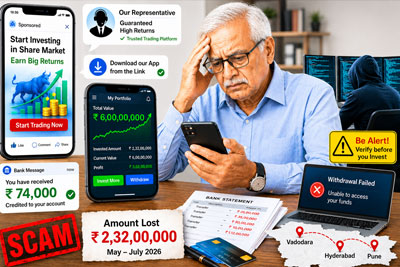 A 73-year-old Pune-based entrepreneur, who runs a pharma consultancy and a real estate business, has fallen victim to a sophisticated online share trading fraud, losing a staggering ₹2.32 crore between May and July this year.
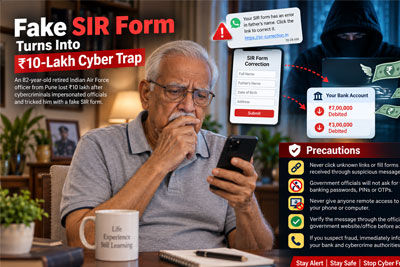 Pune: An 82-year-old retired Indian Air Force officer from Wanowrie lost ₹10 lakh after cybercriminals impersonated officials and targeted him over an alleged mistake in his SIR form.
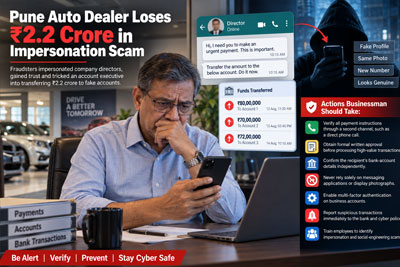 A Bavdhan-based automobile dealer lost ₹2.2 crore in a cybercrime involving the impersonation of company directors. The fraud occurred between August 13 and 14 and targeted the firm’s account executive.